




















Every Veterans Day, we remember the sacrifices of those who have served in the military. One of Minnesota’s contributions came from the 1st Minnesota Volunteer Regiment, whose courage and dedication during the Civil War is what we honor on this day. This is the story of the 1st Minnesota.
When the nation learned it was at war on April 14, 1861, after the Confederate attack on Fort Sumter, Minnesota Gov. Alexander Ramsey was on state business in Washington, D.C. Ramsey hurried to the War Office of Secretary Simon Cameron to offer 1,000 troops for the nation’s defense. The offer was transmitted to President Abraham Lincoln that same morning. The timing made Minnesota the first state to offer troops in defense of the Union, beginning four years of participation in the Civil War. Men from across the newly formed frontier state answered the nation’s call.
When the regiment left Fort Snelling, Minnesota, on June 22, 1861, it was uniquely uniformed in red flannel shirts, black pants and black slouch hats. It was the only regiment from Minnesota assigned to the Eastern Campaign. Placed in the 2nd Division of the 2nd Corps, it was also the only Minnesota regiment to fight in the Army of the Potomac.
On July 2, 1863, the 1st Minnesota found itself on the battlefield at Gettysburg near Plum Run on Cemetery Ridge. When Confederate forces broke through the corps in front of them, the 262 men of the 1st Minnesota were the only organized force between the Confederates and the Union rear. Reinforcements were on the way but would not arrive in time to stop the advance. As two brigades of Confederate infantry—more than 1,800 men—marched forward, Gen. Winfield Scott Hancock came upon the 1st Minnesota.
“My God, are these all the men we have here? What regiment is this?” asked Maj. Gen. Winfield S. Hancock.
“First Minnesota,” replied Col. William Colvill.
“Colonel, do you see those colors?” Hancock asked, pointing toward Wilcox’s Confederate brigade. When Colvill replied, Hancock spoke sharply: “Then take them!”
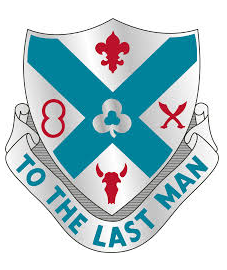
Facing odds of more than seven to one, the 1st Minnesota fixed bayonets and prepared to charge the Confederate lines. When asked by Hancock if the regiment could hold the advance, Colvill replied, “To the last man.”
Charging more than 150 yards of open field, the 1st Minnesota suffered 82% casualties within five minutes of fighting—the highest of any unit in the Civil War. The regiment’s desperate charge disrupted the advance of Gen. Wilcox’s Alabama Brigade and held the line long enough for Union reinforcements to arrive. Only 47 men would answer the roll that evening.
“Those five precious minutes were made possible by the gallant charge of the 1st Minnesota,” said Maj. Gen. Winfield S. Hancock.